Amid rising tensions between the United States and Iran, many are beginning to closely monitor how the situation could affect the global economy. One industry indirectly impacted is the construction sector, as it is closely tied to energy, raw materials, and international logistics systems.
Although Thailand is not directly affected by conflicts in the Middle East, however a prolonged situation could drive construction costs higher in 2026, particularly for building materials linked to energy consumption, manufacturing, and imports.
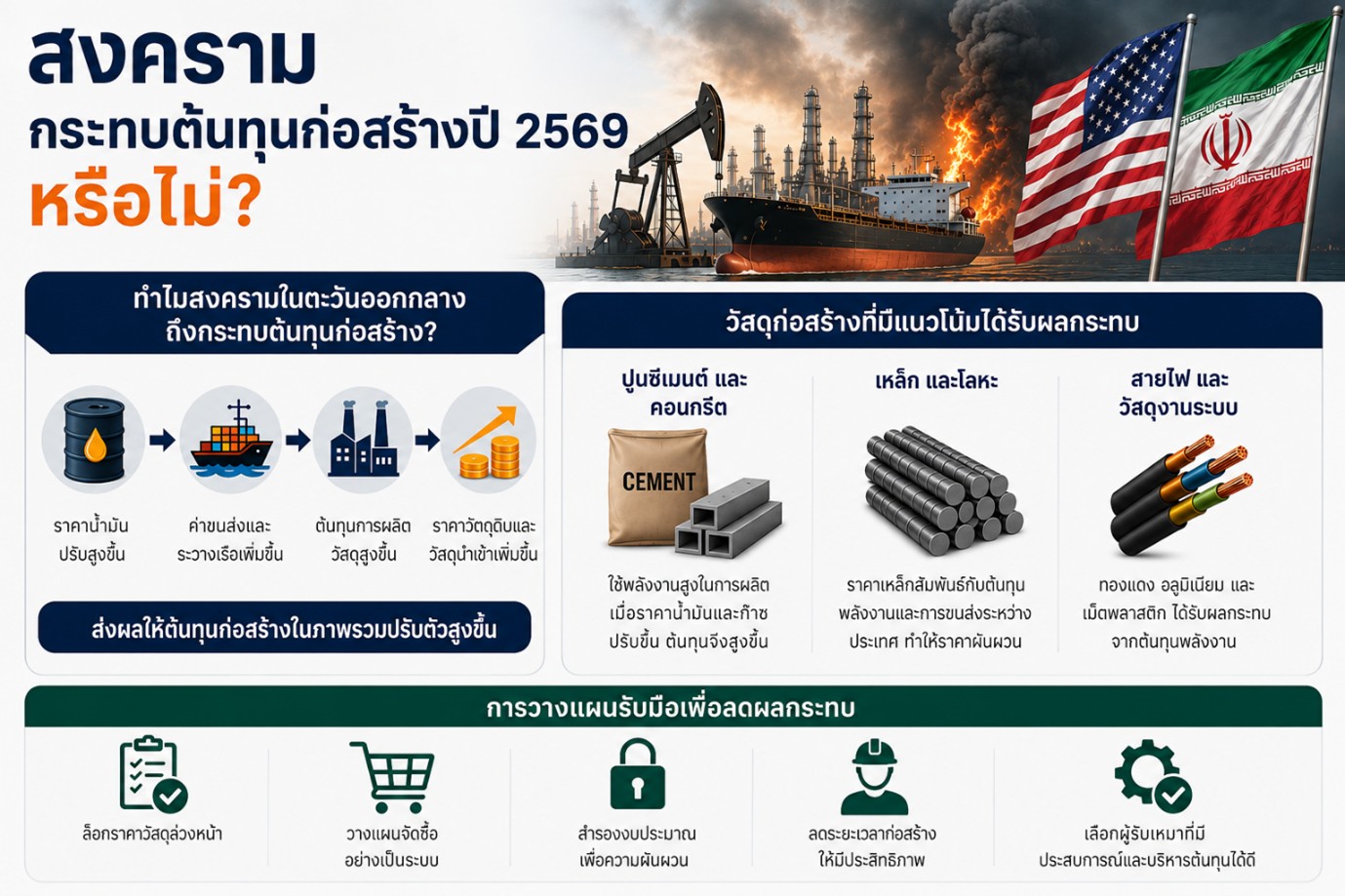
Why Does Conflict in the Middle East Affect Construction Costs?
The Middle East is one of the world’s major oil-producing regions. Any conflict that disrupts oil supply routes or transportation systems can immediately drive-up production costs for construction materials.
This may affect:
• Energy costs for construction and manufacturing
• Cement and steel production costs
• Prices of imported construction materials
• Transportation and shipping costs for building materials
Construction Materials Likely to Be Affected
Several types of construction materials are expected to be directly impacted, including:
- Cement and concrete, which require high energy consumption during production
- Steel and metals, which are heavily influenced by global energy prices and commodity markets
- Electrical systems and wiring materials involving copper, aluminum, and plastic resin, all of which fluctuate with oil prices
At the same time, imported materials such as sanitary ware, air-conditioning systems, and decorative materials may also become more expensive due to rising freight costs and currency fluctuations.
Impact on Project Owners and Developers
As construction material prices and overall construction costs become increasingly volatile, early-stage project planning is becoming more critical than ever.
Many developers are now focusing on:
- Locking in material prices in advance
- Implementing systematic procurement planning
- Selecting alternative materials where possible
- Managing construction timelines more efficiently
These strategies help reduce cost risks during project execution.
Cost Planning Is Becoming More Important
PPM 998 Construction believes that controlling construction costs today involves more than simply following architectural plans. It also requires careful procurement planning, selecting suitable materials, and comprehensive project management to help project owners control budgets and minimize the impact of market volatility.
Although international conflicts may seem distant, their effects on energy prices, the global economy, and construction material costs can directly impact construction expenses — especially during periods of high transportation and raw material price volatility.
For those planning construction or property development projects in 2026, closely monitoring global economic conditions and implementing careful cost planning strategies will help reduce risks and maintain better budget control.